Community Faq: the questions a doubtful buyer or seller asks first
Short answers come first, then the one question that decides the most. The repair, replace or disclose decision stays on the Resources page.

Quick answers to the questions that come up first
Each answer below is short, and where a rule or a figure is quoted, its source is named beside it. Where the answer depends on the town or on the house, the answer says so. The question with the most at stake is answered in full further down the page.
- Should I call an inspector or a roofer first?
- Call the inspector first. An inspection gives a written account of what the roof is doing before anyone offers to sell you the work, and that account is what any later quote should be measured against. A roofer can look at the same roof and give a price, but that price describes the work the roofer would do rather than the condition of the roof as a whole. The repair, replace or disclose decision that follows is set out on the Resources page.
- Does a verbal quote count for a roof job?
- Not for a home improvement contract above $1,000. Massachusetts requires that contract to be in writing, and it must say which permits are needed and that the contractor is obliged to obtain them. A homeowner who pulls their own permit is excluded from the state guaranty fund, so the permit question belongs in the written contract. The statute is General Laws, Chapter 142A, Section 2.
- How can I tell whether a roof needs replacing?
- Cracked or missing shingles and water stains in the attic are the signs worth checking first. For the detail on when a roof is a candidate for replacement, see the Asphalt Roofing Manufacturers Association's frequently asked questions. A written inspection should confirm what the signs suggest before any replacement is priced.
- How do I avoid a home improvement scam?
- Pressure to decide on the spot and demands for full payment up front are the usual warning signs, and getting more than one written estimate is the simplest check. For the detail on what a written estimate and contract should include, see the Federal Trade Commission's guide to avoiding a home improvement scam. Do not sign until the contract says what the work is, who pulls the permit and how payment is scheduled.
- Is there a state fund to fall back on?
- There is one, but it is a last resort. The Home Improvement Contractor guaranty fund compensates owners for actual losses, and a claim requires that the contractor has already failed to pay a judgment or award. The statute sets out the rest in General Laws, Chapter 142A, Section 5, and this guide does not state a payout limit because the current figure was not confirmed here.
- Does a contractor need a license for a house?
- A contractor working on a one-to-four-family home in Massachusetts needs a Home Improvement Contractor registration in addition to any Construction Supervisor License. The two are separate credentials, so a reader should ask for both numbers. Procore's summary of Massachusetts contractor licensing sets out the requirement.
Why the inspection comes before the estimate
The question of who to call first has two plausible answers, and each leads somewhere different. A roofer can look at the roof and give a price, and that price describes the work the roofer would sell. An inspector looks at the roof to describe what is wrong with it, and that description is what a buyer or seller needs before any price means anything. We set the two side by side so a reader can see which one answers the question actually in front of them.
A roofer's estimate still matters once the condition is known. It should be in writing, name the contractor's registration number, and say who pulls the permit. Compare it with the written inspection rather than with other estimates alone, because two estimates for different work do not tell a reader which work the roof needs. Where a quote and an inspection disagree, ask the inspector to explain the gap before signing anything.
The inspection tells you what is wrong with the roof, and the estimate only tells you what someone would charge to fix it.
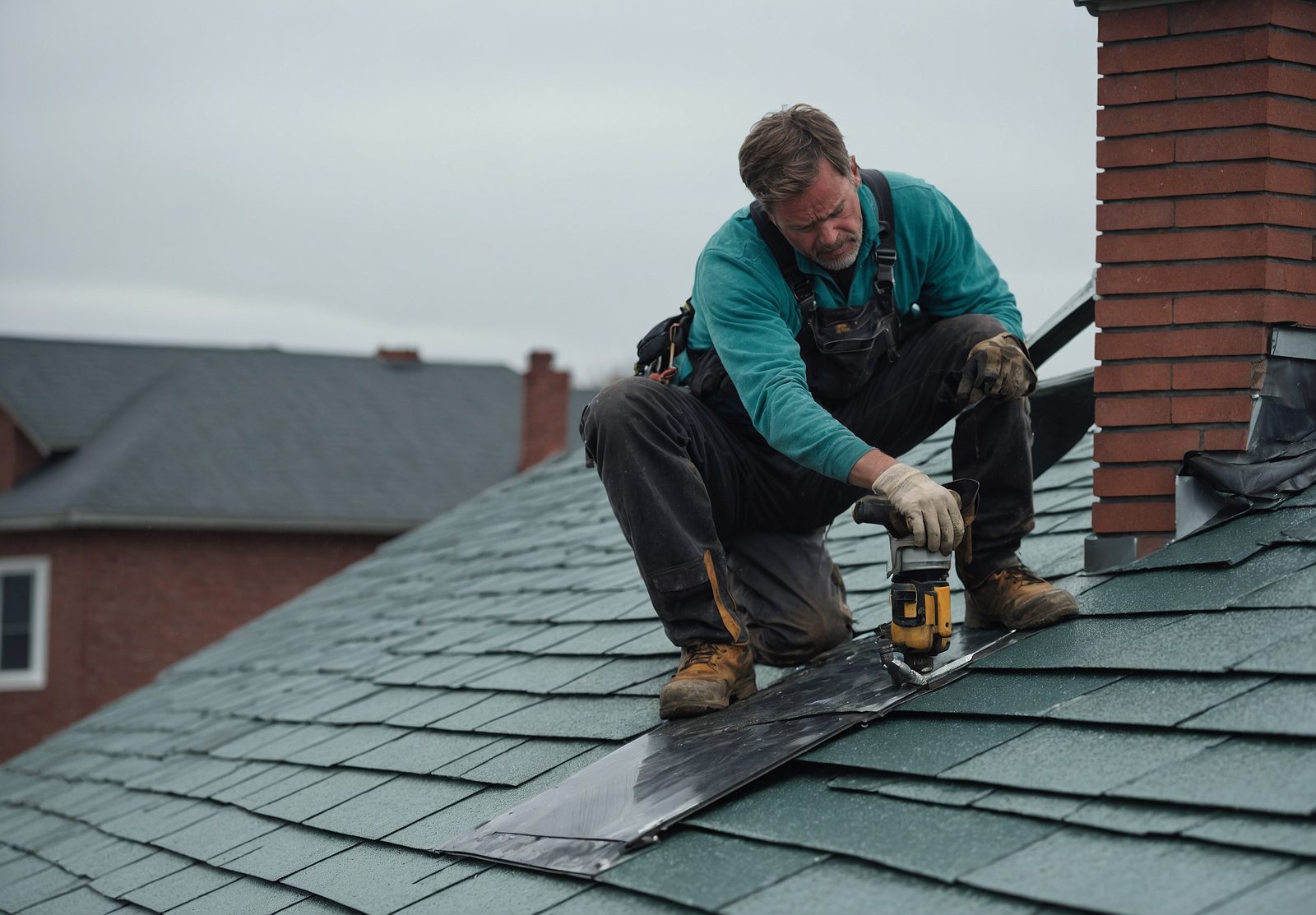
What a roof leak looks like from the ground and the attic
A stain on a ceiling makes people ask whether the roof has failed. A stain is a sign to check, not a diagnosis, and the attic is the first place to check it. From inside the house, look for water marks on the underside of the roof boards, damp or flattened insulation, and daylight showing through the boards. From the ground, look at the roof edge, the chimney flashing and any bent or lifted metal at the joins, without climbing the roof to see it. Ice is a separate case, because as little as 1 or 2 inches of snow can form ice dams at the eave. The University of Massachusetts Amherst extension article gives heat control as the fix, with ceiling insulation of at least R-38 and soffit-to-ridge ventilation, but it is an older article, so confirm the current insulation value with the building department.
A check you can do yourself before the inspector arrives
Run through these four steps in daylight, with a flashlight and a notebook, before you speak to anyone about the roof. Each step uses only what is visible from inside the house or from the ground. Write down what you see with the date, and keep the notes with any photographs taken from the ground. The list is for the inspector and for any roofer who quotes, so the written inspection starts from what you actually saw.
- Go into the attic in daylight. Look at the underside of the roof boards above each ceiling stain and note whether they are dark, soft or show gaps.
- Check the insulation around those boards. Note whether it is damp, compressed or flattened, and where.
- From the ground, walk the perimeter. Look at the roof edge, the chimney flashing and any joins where metal meets shingle, and note anything bent, lifted or missing.
- Hand the list over before any quote is discussed, so the estimate is measured against what was seen.
These checks do not replace a written inspection. A reader who finds a wet attic or a sagging roof line should call the inspector before doing anything else. Repairs made in the meantime can change the evidence an inspector needs to see, so leave the roof as it is until the inspection is done. The same rule applies to any temporary patch that a contractor offers to make.