History of a Roof: Where the Record Lives and What It Shows
A roof's history is written down in places most owners never open. This page covers where to look, how to read a gap, and the rules this guide applies when it reads a record.

A roof's record belongs to one address
The history of a roof is scattered across the people who owned the house, the people who worked on it and the offices that approved the work. It rarely sits in one folder. This guide reads that record the way it reads any source: from what is written down, with a date and a name attached. A roof that was replaced, recovered or patched usually leaves a trace somewhere, even when nobody kept the file.
A roof with no paperwork is not a roof with no problems. It is a roof nobody has written down.
The places to look are the closing papers and the seller's disclosure, the permit records kept by the town, invoices and warranty papers from the roofer, inspection reports, and any insurance claim for storm damage. Each one answers a different question.
Five rules for reading what a roof's file says
Each rule can be applied to a file a reader already holds.
- A dated record with a name on it counts for more than a recollection of what was done.
- A missing item is a gap to ask about, not a clean bill of health for the roof.
- A permit is checked with the town, not taken on the seller's word. Lowell's building permit page lists roofing and siding among the work that needs a permit. The Dracut permit page does not name roofing, so ask its Building Department directly.
- Warranty papers are read for the year the cover changes, not the year it starts. From year 11, only prorated material costs are covered and labor is the owner's cost. Three-tab asphalt shingles need replacing about every 20 years, so the age on the papers is checked against the shingle type (Fine Homebuilding on asphalt roof life).
- Two roof coverings is the usual ceiling. Most codes allow no more than two, and tear-off is the safer route where a roof already has two layers, sags across the ridge or has rotted deck boards (the Asphalt Roofing Manufacturers Association on reroofing).
The belief that a quiet roof is a sound roof
Many readers reasonably take a roof that looks fine from the street to be a roof with no problem. The belief is understandable, because the street shows shingles and nothing else. It does not show the eave, the attic, the flashing where the roof meets a chimney, or the paperwork.
The facts do not support it. Ice dams form when melted snow refreezes at the roof edge, and as little as 1 or 2 inches of snow can be enough (UMass Amherst's guidance on preventing ice dams, an older extension article). That guidance points the fix at the attic, with at least R-38 of ceiling insulation and soffit-to-ridge ventilation, not at a new covering. Whether an eave ice barrier is required depends on whether the town has an ice-dam history, so ask the building department.
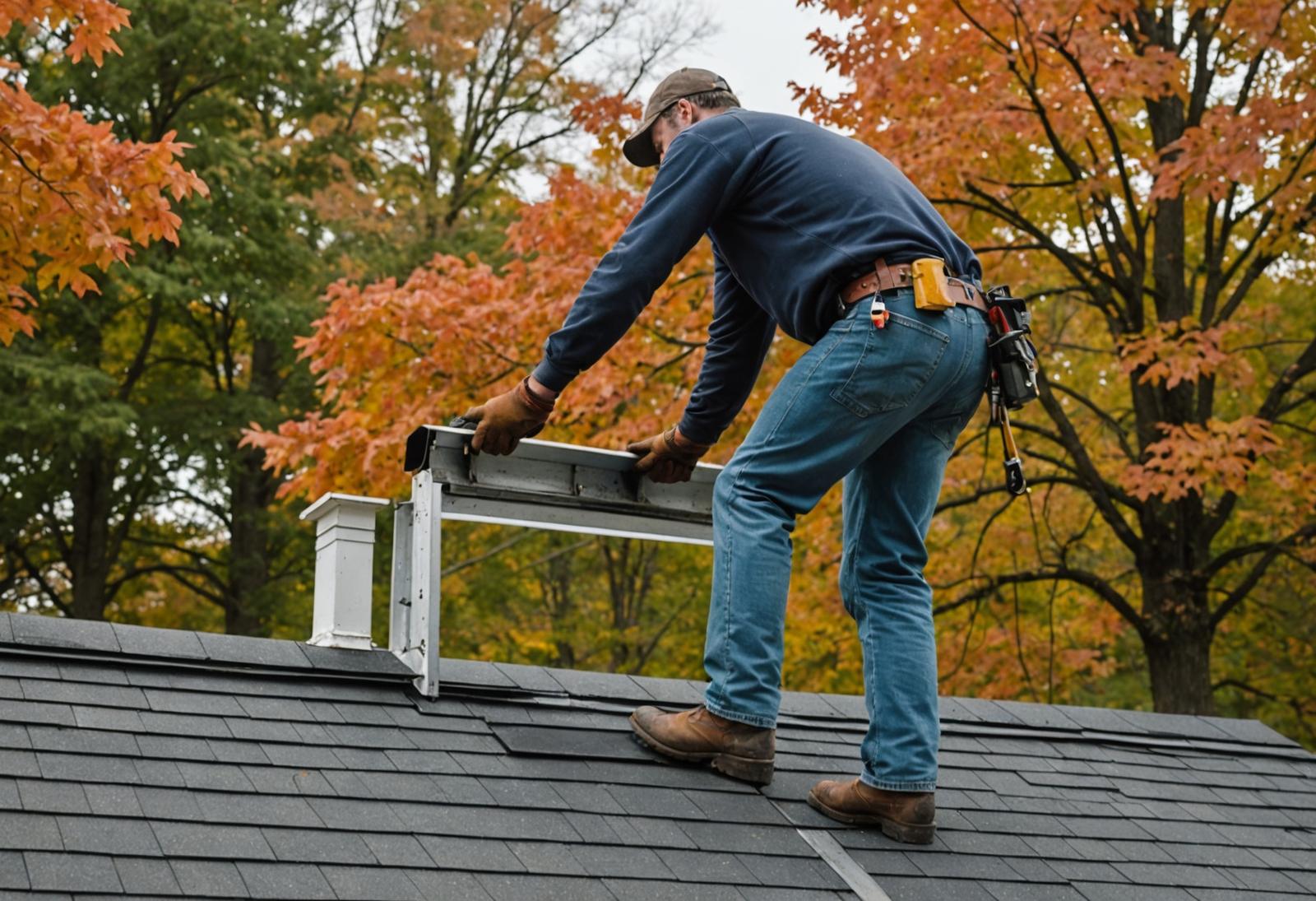
What a gap in the file should prompt you to do
A gap is a question, and each one has a place to take it. A missing permit goes to the town building department. A missing warranty or invoice goes to the seller, or to the roofer named on the work if the file names one. A missing layer count goes to a roofer who can look at the edges and the attic and report back in writing.
When the file is complete enough to answer these questions, the decision helper on the Resources page takes it from there.